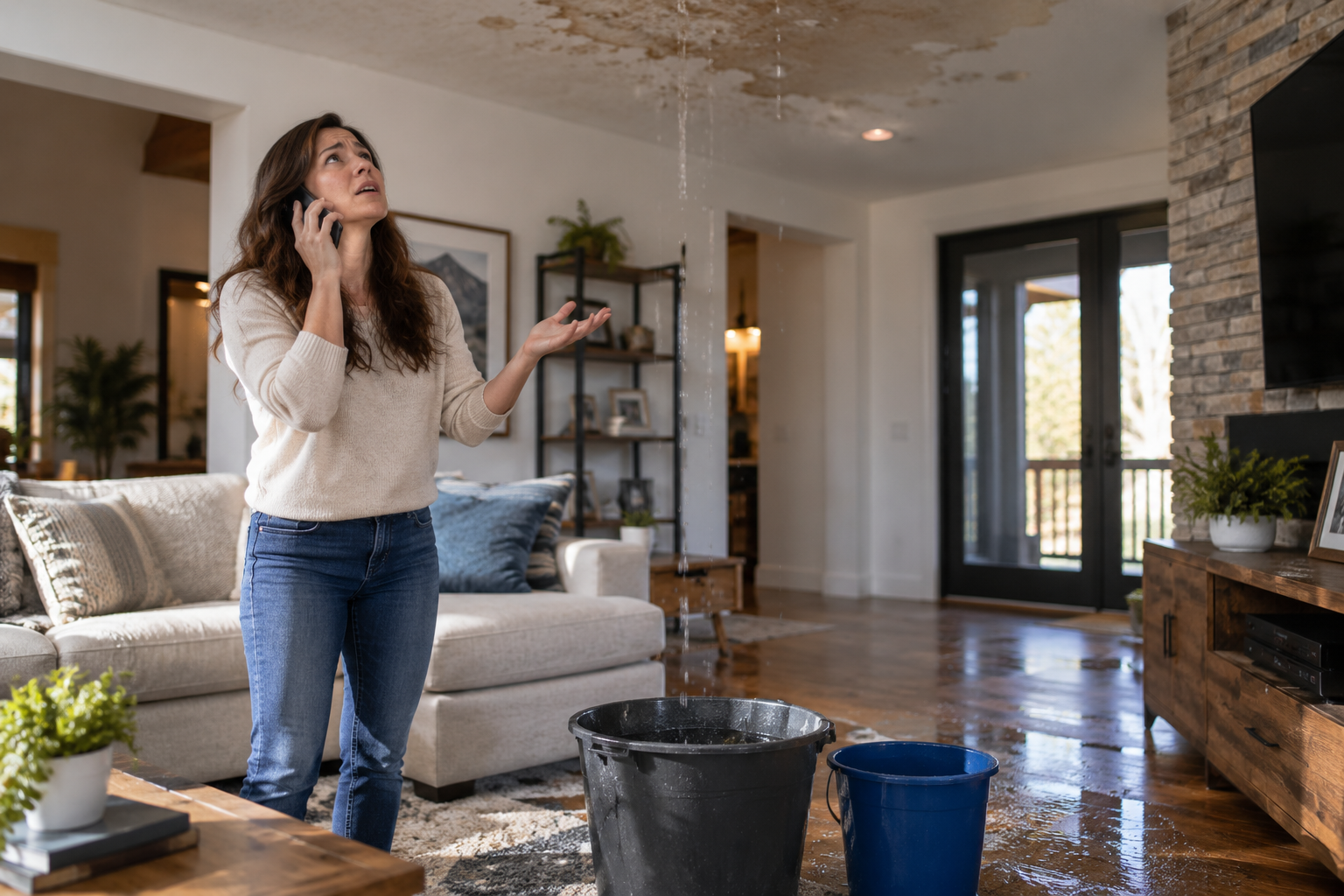
Most homeowners don't. And the moment you find water where it shouldn't be, that question stops being theoretical.
When water is actively moving through your home, insurance paperwork is the last thing on your mind. You're thinking one thing:
How do I stop this?
Then, usually within the hour, the financial questions start stacking up:
- What is this going to cost?
- What does my policy actually cover?
- What's my deductible?
- What should I be photographing right now?
- Should I clean this up myself?
- Do I call my insurance company first, or a restoration company?
- What if there's damage behind the walls that I can't see?
If you're feeling overwhelmed by that list, you're not doing anything wrong. You're dealing with an emergency and being asked to make important financial decisions at the same time. Nobody is at their best under those conditions.
Here's the good news. You don't need to become an insurance expert overnight. But you do need to know what to document, what questions to ask, and which mistakes tend to cost homeowners the most.
That's what this article covers.
Does Homeowners Insurance Cover Water Damage?
The honest answer is: it depends.
Anyone who gives you a flat yes or no without reading your policy is guessing. Homeowners policies pay for damage caused by the perils listed in the contract, and every policy defines those perils, exclusions, and endorsements a little differently. Whether water damage is covered typically comes down to a few things:
- The cause of the damage. A sudden and accidental event, like a pipe that bursts, is typically treated differently under a policy than long-term seepage or damage an insurer considers a maintenance issue. And water that comes from outside your home as flooding is generally a separate matter altogether, which we'll cover below.
- Your specific policy. Coverage, exclusions, endorsements, and optional add-ons vary from policy to policy, even within the same insurance company.
- The circumstances of the incident. How the damage happened, when it was discovered, and what was done afterward can all matter.
This is why the first practical step isn't guessing. It's contacting your insurance company, reviewing your policy, and asking direct questions about your specific situation. Your insurer determines coverage under your policy. We'll cover exactly what to ask a little further down.
But here's the part homeowners often miss: regardless of what your coverage turns out to be, the water emergency itself needs to be taken seriously right away. Water doesn't wait for your claim to be processed. It keeps moving into flooring, drywall, and framing whether the loss ends up covered or not.
So while the coverage question gets sorted out, your job is to document what's happening and get the damage properly evaluated.
A Burst Pipe Is Not a Flood: What That Means for Your Coverage
This distinction confuses a lot of homeowners, and it matters more than almost anything else in this article.
In everyday conversation, "my basement flooded" can mean a water heater let go, a pipe froze and split, or the Animas jumped its banks. To your insurance, those are very different events.
Internal water losses, like a burst pipe, a failed appliance line, or a water heater leak, are the kinds of sudden events that homeowners policies may address, depending on the policy and the cause.
Flooding has a specific meaning in the insurance world. FEMA and the National Flood Insurance Program define a flood, in general terms, as an excess of water on land that is normally dry, such as overflowing rivers or streams, unusually rapid runoff, or mudflows. Water rising from outside and entering your home is a fundamentally different event from water escaping a pipe inside it.
Here's why that matters: most standard homeowners insurance policies do not cover flood damage. Flood insurance is generally a separate policy. That's not a fine-print technicality. It's the basic structure of how these two types of insurance work in the United States.
What this means in Durango
The City of Durango participates in the National Flood Insurance Program, which is what makes federally backed flood insurance available to property owners here, and FEMA flood maps identify flood hazard areas in and around the city. Durango has an established floodplain management program, which tells you something simple: flooding is a recognized local issue, not a hypothetical one.
Two things are worth knowing about flood risk in our area:
First, flood risk is not limited to the mapped high-risk areas. According to FEMA, roughly one-third of NFIP flood claims over the past decade came from outside high-risk flood zones. Spring snowmelt, heavy rain, and rapid runoff, including runoff from land burned by wildfire, can all cause flooding, and those are all familiar conditions in Southwest Colorado.
Second, being outside a high-risk zone doesn't mean you have no risk, and being inside one doesn't automatically mean you're uninsured. Some mortgage agreements require flood insurance for properties in high-risk areas. The practical move is to check your actual situation: look up your property on FEMA's flood maps, and ask your insurance agent whether you have flood coverage and whether it makes sense for your property.
This is not to say every Durango homeowner needs flood insurance. It's to say that every Durango homeowner should know their flood risk and know what their policies do and don't cover, before water is involved. If you decide you want flood coverage, know that a new NFIP policy typically has a waiting period before it takes effect, so it isn't something you can add mid-emergency.
And what about sewer backup?
Sewer and drain backup sits in its own category, and the coverage rules depend on both the cause and the policy.
On the homeowners side, sewer or water backup coverage is commonly an optional add-on. Some policies include it through an endorsement; many don't include it by default. The only way to know is to check your specific policy or ask your agent directly.
On the flood insurance side, the NFIP draws the line at cause: a sewer backup may be covered when it's directly caused by flooding, such as during a heavy rainstorm, but not when the backup happens for another reason, like clogged pipes.
So the honest answer on sewer backup is the same as everything else here: coverage depends on the cause and the policy. If you don't know whether you have backup coverage, that's a question worth asking your insurer this week, not during an emergency.
What Should You Document After Water Damage?
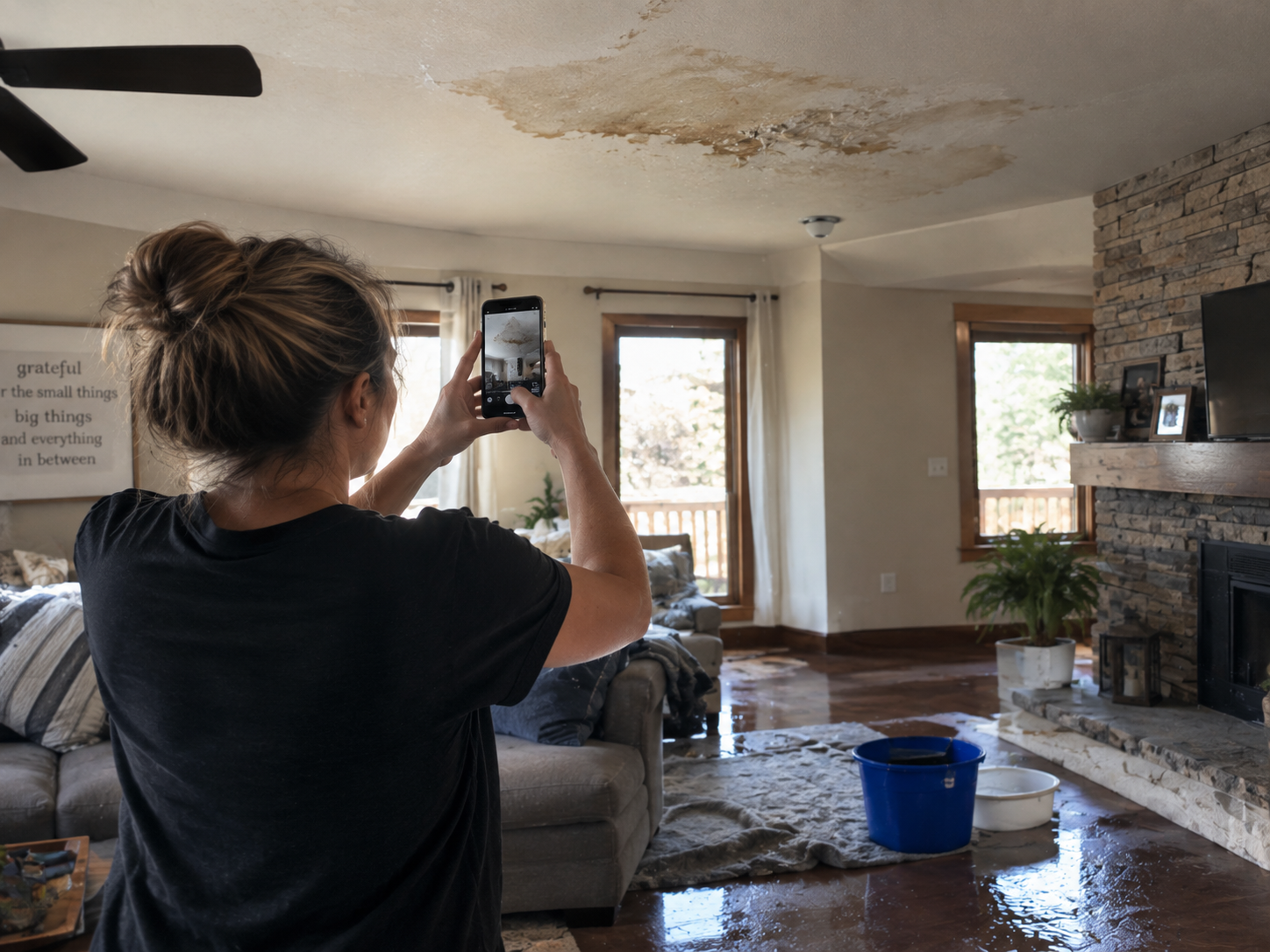
Most homeowners instinctively grab towels before they grab their phone. That's understandable. But if a claim is filed later, the record of what happened can matter a great deal, and many homeowners simply don't know what information will actually be useful.
Here's a practical way to think about documentation.
Photograph the affected areas
Take clear photos and video of everything you can see: standing water, wet flooring, stained ceilings, soaked drywall, the source of the water if you can identify it. Wide shots for context, close-ups for detail. More is better than less.
Photograph damaged belongings
Furniture, rugs, electronics, boxes in a flooded basement, kids' belongings. Document each item and its condition before anything gets moved or thrown away. If something has to be discarded for safety reasons, photograph it first.
Keep a basic timeline
Write down when you discovered the damage, what you believe caused it, and what actions you took and when. Who you called. When they responded. What was said. It doesn't need to be formal. Notes on your phone are fine. A clear timeline is much easier to build in the moment than to reconstruct from memory two weeks later.
Keep records of any restoration work
If professionals get involved, keep everything: estimates, moisture readings, drying logs, invoices, before-and-after documentation. Professional restoration records create a much more complete picture of what happened to your home and what it took to fix it than photos alone.
One important note: documentation requirements vary by insurer and by policy. The goal here isn't to satisfy some universal checklist. It's to make sure that whatever your insurance company ends up needing, you actually have it.
Why Photos Alone May Not Tell the Whole Story
This is the part most homeowners have never been told, and it's where a lot of expensive surprises come from.
When water shows up in a home, the natural response is to attack it with whatever is on hand: towels, a shop vac, a couple of box fans. And to be fair, that effort often works on the water you can see. The floor gets dry to the touch. The carpet stops squishing. It looks handled.
The problem is that "looks dry" and "is dry" are two different things.
Water follows gravity and finds the path of least resistance, which usually means it travels into places you can't easily check: under flooring, behind baseboards, inside wall cavities, into insulation and subfloor. A surface can feel completely dry while the materials underneath it are still holding moisture.
That's why professional restoration doesn't rely on eyes and hands alone. A proper evaluation of water damage generally involves:
- Moisture detection, using tools like moisture meters and thermal imaging to find water that isn't visible
- Structural drying, using commercial drying equipment sized for the actual conditions, not just air movement
- Moisture monitoring, meaning readings are taken over time to confirm materials have actually returned to appropriate levels, not just that they feel dry
- Mold prevention, because moisture that lingers in enclosed spaces creates the conditions mold needs
None of this is meant to make you feel bad about grabbing the shop vac. Removing visible water quickly is a reasonable thing to do. The point is simpler than that:
There's a practical documentation angle here too. A prompt professional assessment helps establish the actual extent and condition of the affected materials while the situation is fresh, and it starts a documented record of the damage and the restoration process from day one, rather than leaving you to piece the story together later.
Not sure whether the damage in your home goes deeper than what you can see? That's a legitimate reason to have it professionally assessed before you assume anything.
Get Your Free Water Damage Assessment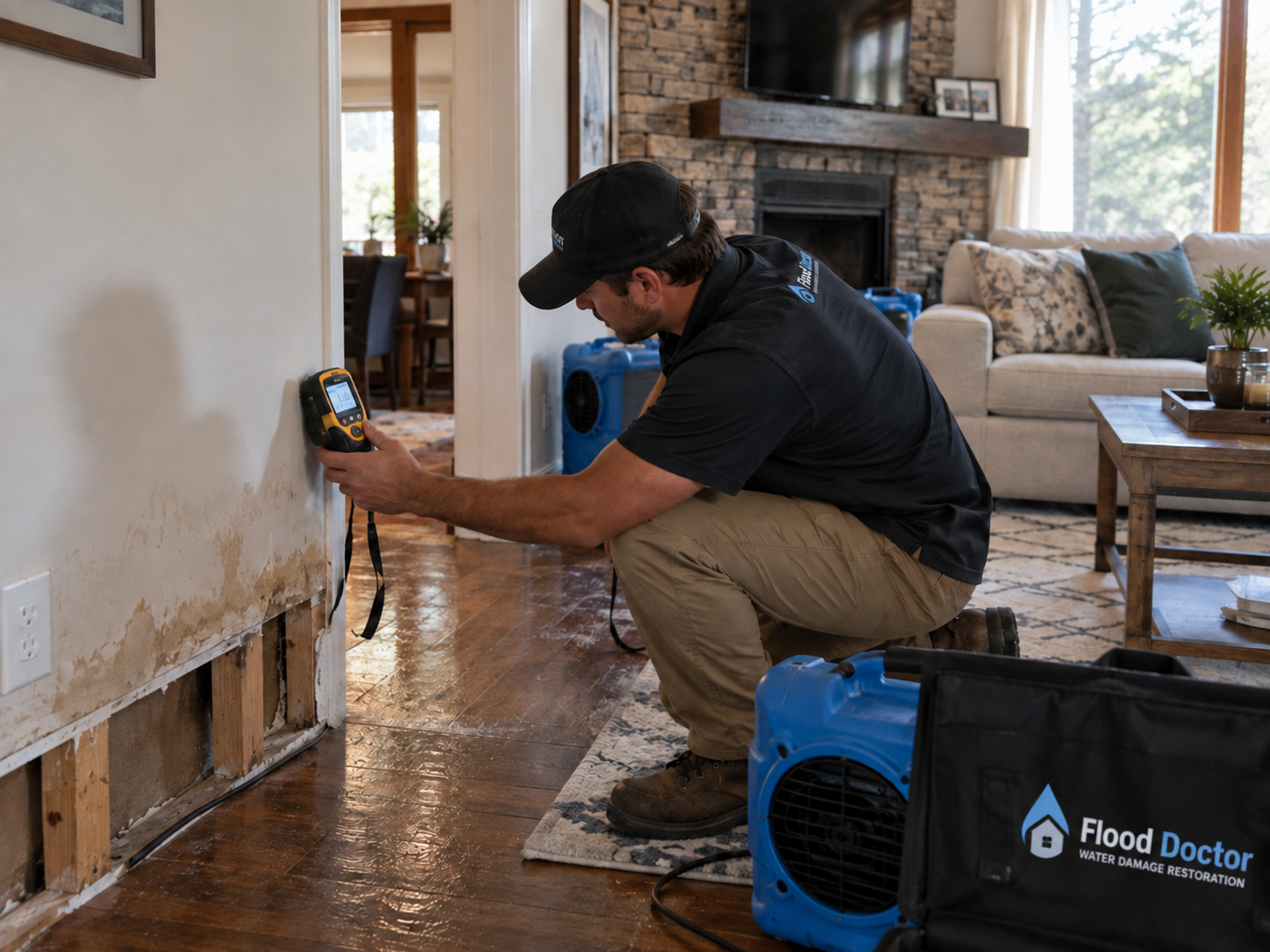
5 Mistakes Homeowners Make After Water Damage
These come up again and again, and every one of them is made by smart, responsible people trying to do the right thing under stress.
Mistake #1: Waiting to see if it dries
This one is almost always about money. There's a hope that if you give it a few days, the problem will resolve itself and you'll avoid a big bill.
The trouble is that waiting doesn't make water damage smaller. It just makes it harder to understand. The longer moisture sits in building materials, the harder it becomes to know the full extent of what's affected.
If the damage turns out to be minor, a professional assessment will tell you that. If it isn't, you'll be glad you found out early.
Mistake #2: Trying to handle everything yourself
Towels, shop vacs, and household fans can remove visible water. What they can't do is tell you whether the wall cavity is wet, whether the subfloor absorbed water, or whether the affected area is actually dry or just dry on the surface.
Homeowners who go this route aren't being careless. Usually they're trying to save money and get some control back over a situation that feels out of control. Both of those instincts are healthy. The gap is in tools and information, not effort.
Mistake #3: Calling the first company that answers
When there's water in your home, speed feels like everything. So a lot of homeowners call down a search results page and hire whoever picks up first.
A fast answer is worth something. But before you hand someone your home and a role in documenting your loss, it's worth a few minutes to evaluate:
- Do they communicate clearly and professionally?
- Do they have real experience with residential water damage?
- Do they document their work thoroughly?
- Can they handle the full restoration, or only part of it?
- Do they understand how the insurance claims process works from the homeowner's side?
The company you choose will be producing much of the record of what happened to your home. That's worth choosing deliberately, even under pressure.
Mistake #4: Not documenting the situation properly
Plenty of homeowners take some photos and assume they're covered. But a handful of pictures of a wet floor isn't the same as a complete record of the damage, the cause, the timeline, and the restoration work performed.
This is one of the quieter advantages of professional restoration: the process itself generates documentation. Moisture readings, drying logs, detailed estimates, records of what was done and why. That paper trail describes what happened to your home with a level of detail that phone photos alone usually can't match.
Mistake #5: Trying to navigate everything alone
Water damage drops you into a world with its own vocabulary and its own rules. Most homeowners have no reason to know what matters in a claim file, which terms mean what, which questions to ask, what restoration work actually needs to happen, or how to keep track of it all while also living their normal life.
You don't get points for figuring it out solo. Professional support during restoration can take a real portion of that mental load off your plate, so you're managing a project with help instead of learning an industry alone in the middle of an emergency.
What Should You Ask Your Insurance Company?
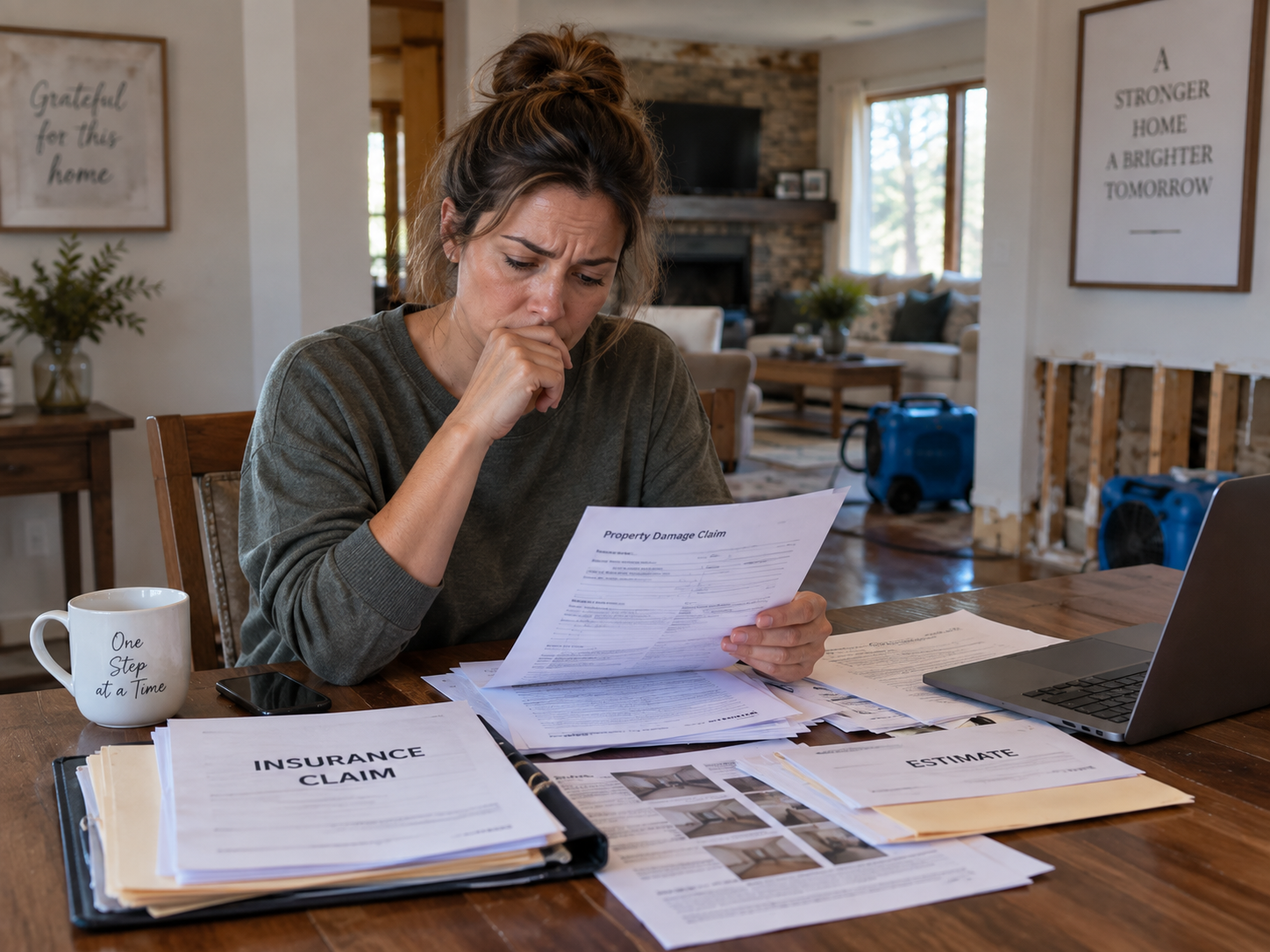
When you call your insurer, having a short list of direct questions turns a stressful call into a productive one. Start here:
- What part of this water damage may be covered under my policy?
- What is my deductible for this type of claim?
- Do I have sewer or water backup coverage? Do I have flood coverage?
- What documentation do you need from me, and in what form? Photographs, estimates, restoration records?
- What are the next steps for my claim, and what's the timeline?
- Is there anything I should do right now to prevent additional damage?
Write the answers down, along with the date, the time, and the name of the person you spoke with. Add it to that timeline you started earlier.
To be clear: asking good questions doesn't guarantee coverage. Your insurance company determines coverage under your policy. What good questions do is remove guesswork. You'll know what your policy says, what your insurer expects from you, and what happens next. That alone eliminates a large share of the stress in this process.
Where Professional Restoration Fits Into the Process
It helps to understand that you're dealing with two separate tracks that run at the same time.
Insurance determines what's covered. That decision belongs to your insurance company, applying your policy to the circumstances of the loss. No restoration company decides what your insurer will pay, and you should be cautious of anyone who suggests otherwise.
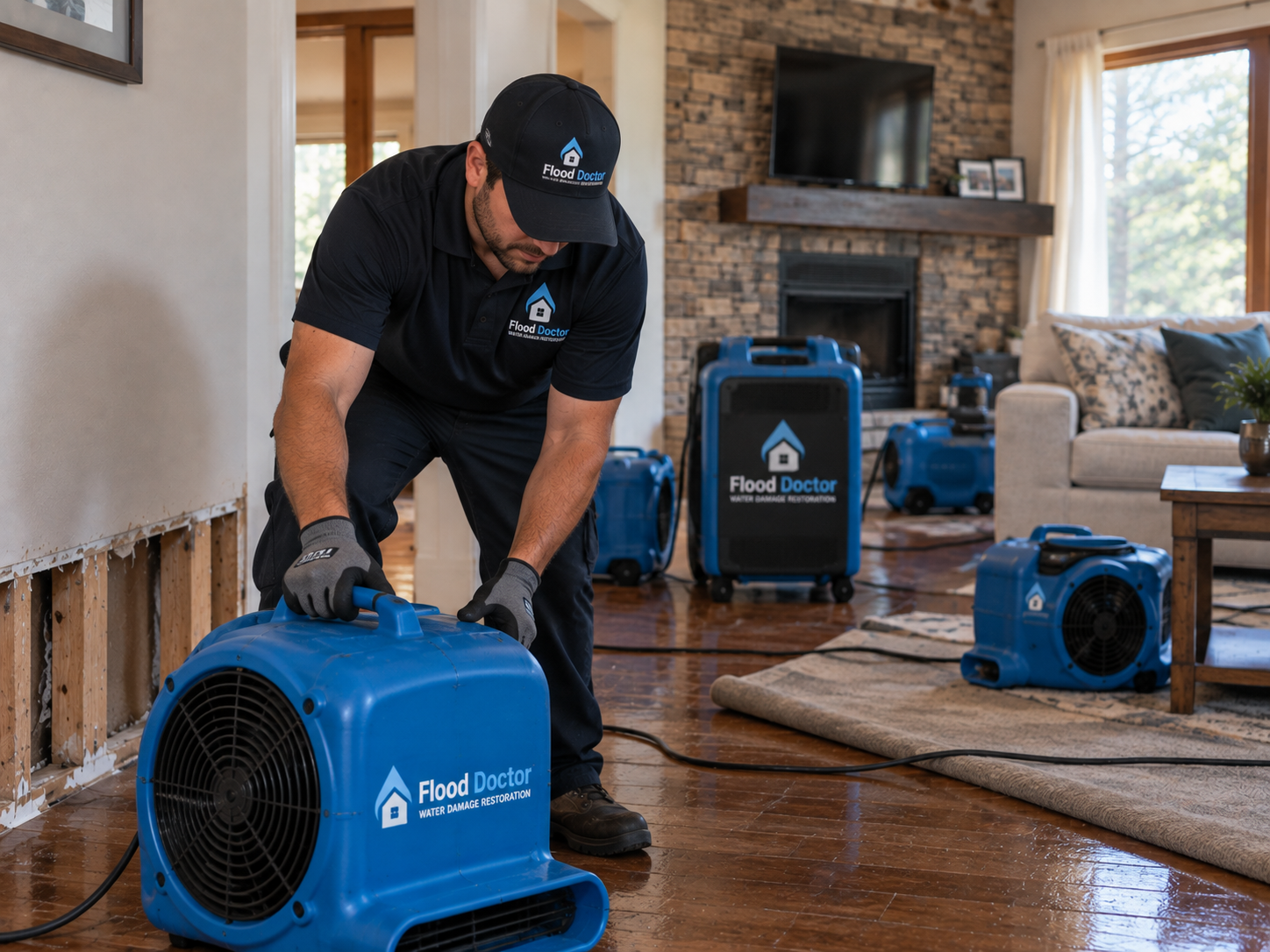
Restoration deals with the physical reality: getting the water out, getting the structure dry, and getting your home back to normal, while documenting the work along the way.
A professional restoration process for residential water damage generally involves some combination of:
- Water extraction
- Structural drying
- Moisture detection and ongoing moisture monitoring
- Cleaning and sanitization
- Deodorization
- Mold prevention
- Reconstruction and rebuilding where materials can't be saved
Where the two tracks meet is documentation and communication. Restoration work produces detailed estimates, moisture readings, and records of the damage. Restoration professionals who work with the claims process regularly can communicate with adjusters about the work being performed and help homeowners keep the process organized. What they cannot do, and what no one can honestly promise, is control the coverage decision. That stays with your insurer.
The right way to think about it: your insurance company decides what your policy pays for. A good restoration company makes sure the physical problem is actually solved, and that the record of what happened to your home is thorough and complete.
What Homeowners Really Want After a Water Emergency
If you ask a homeowner in the middle of a water emergency what they want, they'll say "get the water out." But that's the surface answer.
What they actually want is their home back. The one where the floor is just a floor, the family feels safe, and nobody is thinking about what might still be wet behind the drywall. They want their normal routine back. They want to know, not hope, that the problem was handled correctly. And they want one less thing to carry.
That's the real shift good restoration provides. Not just from wet to dry, but from panic to calm. From feeling helpless to feeling in control. From second-guessing every decision to knowing what happens next and why.
This is why professional help is worth more than the equipment it shows up with. The equipment dries your house. The process, the documentation, the communication, and the plan are what bring structure to a week that would otherwise run on adrenaline and guesswork.

Don't Guess About Water Damage
If you take nothing else from this article, take this:
- Don't assume coverage. Read your policy and call your insurance company with specific questions. Your insurer determines coverage under your policy.
- Know the difference between water damage and flooding. Most standard homeowners policies don't cover flood damage; flood insurance is generally separate. Check your flood risk on FEMA's flood maps even if you don't think you're "in a flood zone."
- Know whether you have sewer backup coverage before you need it. It's commonly an optional add-on.
- Document everything. Photos, video, a timeline, and records of all restoration work.
- Don't trust your eyes alone. Visible water is not the full story, and "feels dry" is not the same as dry.
- Don't wait it out. A situation that looks manageable today can be harder to understand and address later.
- Choose your restoration company deliberately. They'll be producing much of the record of what happened to your home.
- Get professional help when you need it. You don't have to carry this alone, and you shouldn't have to guess.
Water damage is a solvable problem. Homeowners get through it every day. The ones who come out with the least stress and the fewest surprises are the ones who documented well, asked good questions, and got a clear picture of the damage early instead of guessing.